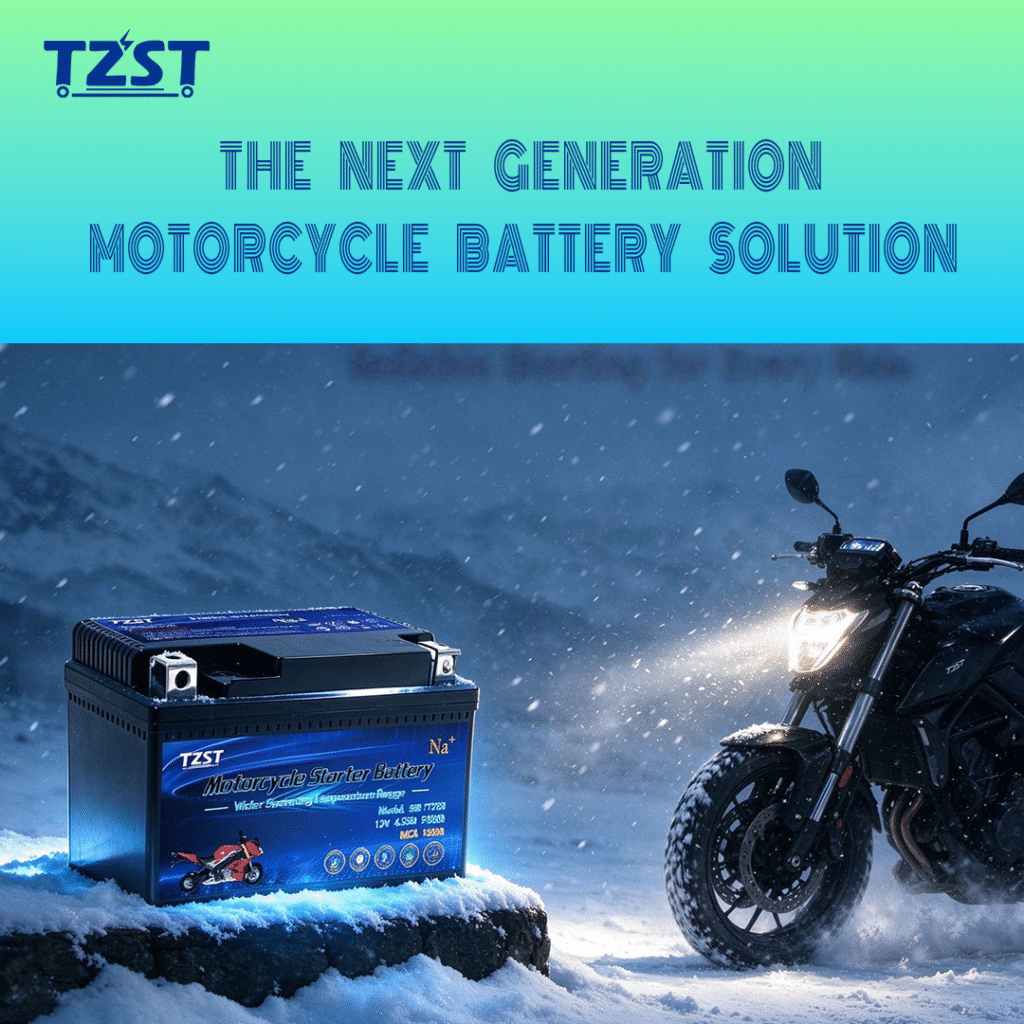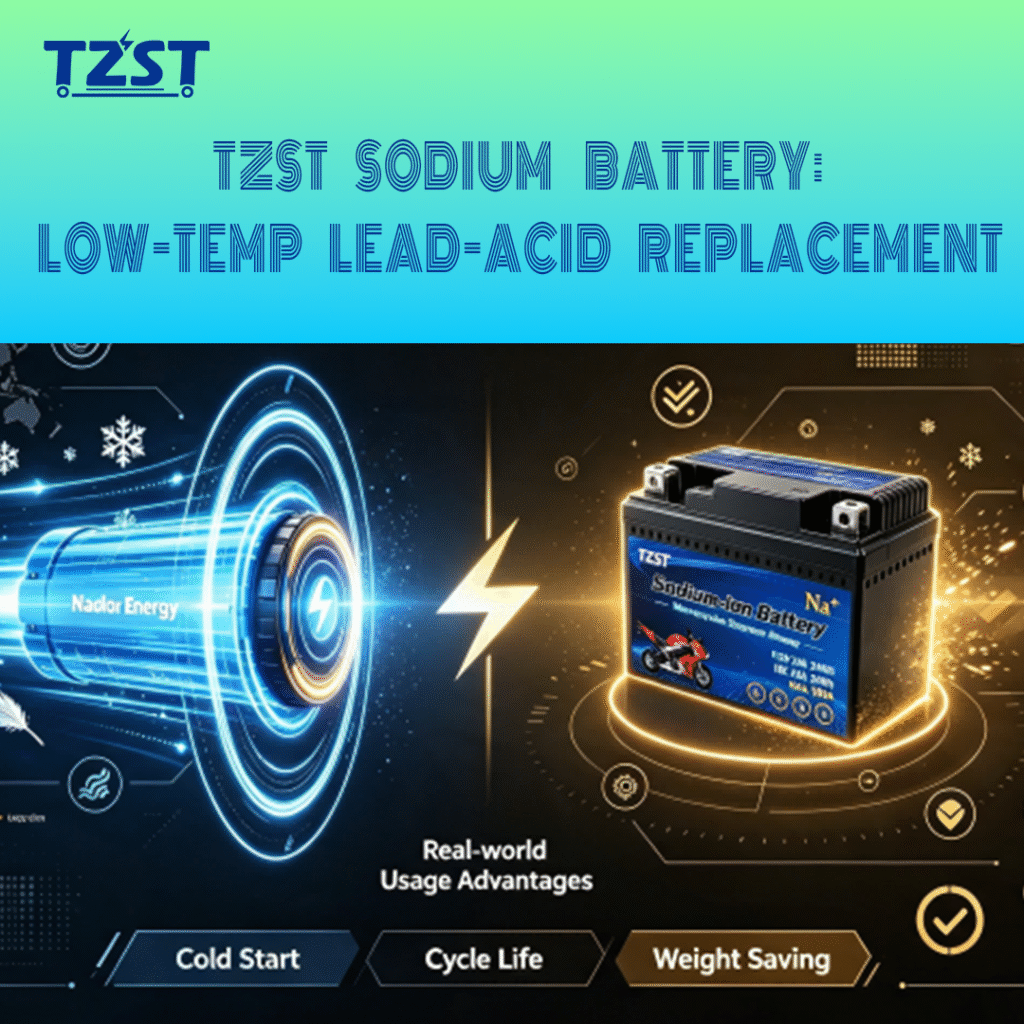
The global motorcycle battery market is rapidly evolving. Battery distributors and retail service providers are actively ditching outdated lead-acid batteries to eliminate persistent operational inefficiencies. Among all alternative technologies, sodium ion motorcycle batteries stand out as the most practical next-generation option. They deliver reliable, high-performance results and solve long-standing pain points in inventory management, high-temperature durability, and order fulfillment. This guide covers the core benefits of sodium ion motorcycle batteries, their superior performance in tropical high-humidity regions, and the latest industry trends driving mass market adoption.
How Next-Gen Sodium Ion Motorcycle Batteries Cut Inventory Management Burdens
For decades, lead-acid motorcycle batteries have created a fragmented supply chain problem. Distributors must stock dozens of specialized battery models to match different motorcycle brands, displacements, and factory specifications. This fragmented inventory increases warehouse pressure, ties up capital, and lowers overall profit margins.
Next-generation sodium ion motorcycle batteries completely eliminate these inefficiencies. Manufacturers design sodium-ion batteries with a unified platform strategy. This core design delivers wide cross-model compatibility and greatly simplifies inventory management for battery suppliers of all sizes.
Universal Fit Battery Models Reduce SKU Counts by 60%
Independent research firm Moto Industry Insights released its 2024 global motorcycle battery market report with eye-opening data. The average regional battery distributor stocks 72 unique lead-acid SKUs to cover just 85% of local motorcycle models. A large SKU portfolio requires extra warehouse space, frequent stock audits, and heavy upfront capital investment. These burdens lock up cash flow and restrict business expansion.
In contrast, platformed sodium ion motorcycle batteries adopt optimized cell packaging and adjustable mounting brackets. They cover 92% of mainstream 125cc to 500cc motorcycle models with only 12 universal SKUs. This upgrade cuts inventory SKU counts by 60% on average.
Fewer SKUs streamline stock tracking and inventory scheduling. Business owners spend less time managing complex stock systems and more time expanding customer bases and revenue channels. Meanwhile, simplified inventory avoids overstocking slow-moving battery models. It eliminates profit losses caused by end-of-season discount clearance for stagnant lead-acid stock.
All universal sodium ion motorcycle batteries pass strict OEM-spec testing for over 470 popular motorcycle models. This includes Honda, Yamaha, Suzuki, Kawasaki and other mainstream brands. Distributors and repair shops never face compatibility issues during order fulfillment. Standardized form factors also speed up warehouse picking and processing. Staff no longer need to distinguish dozens of visually similar specialized batteries.
Internal industry data verifies the efficiency gains. The simplified inventory system reduces order fulfillment time by 38% and cuts order error rates by 72% compared to traditional lead-acid battery operations.
Why Sodium Ion Motorcycle Batteries Outperform Traditional Batteries in Tropical Climates
Warm, high-humidity tropical and subtropical regions pose tough challenges for motorcycle batteries. High ambient temperatures accelerate internal chemical degradation of traditional lead-acid batteries, sharply shortening service life. Even lithium-ion batteries show unstable performance under extreme tropical heat.
Sodium ion motorcycle batteries for tropical climates deliver far better stability and durability. Their unique heat-resistant chemical composition and reinforced cell structure adapt perfectly to year-round high-temperature, high-moisture environments. They serve as the ideal battery solution for Southeast Asia, South America and other regions with 8+ months of annual temperatures above 25°C.
Key Performance Metrics of Sodium Ion Batteries in High-Temperature & Humid Conditions
The Global Battery Performance Institute conducted authoritative independent lab tests in 2025. The results prove the outstanding tropical performance of sodium ion motorcycle batteries. At a constant 40°C ambient temperature, sodium-ion batteries retain 91% of their original capacity after 2000 charge cycles. By comparison, lead-acid batteries of the same rating only maintain 42% capacity under identical conditions.
Sodium ion motorcycle batteries also feature an ultra-wide operating temperature range of -30°C to 55°C. They provide stable ignition and starting power even in extreme heatwaves, where direct sunlight pushes surface temperatures over 50°C. Different from lead-acid batteries, sodium-ion units require no regular water refilling in high heat. This removes a major daily maintenance burden for end users and cuts post-sales support workload for distributors.
In high-temperature storage scenarios, sodium ion motorcycle batteries have an ultra-low self-discharge rate. At 35°C constant temperature, they only lose 1.2% of charge per month. Lead-acid batteries lose up to 8% monthly charge under the same conditions.
This advantage allows distributors to stock sodium-ion batteries for a much longer time. There is no need for frequent pre-sale recharging or performance reconditioning. It effectively reduces waste from fully depleted, unsalvageable batteries. In addition, the fully sealed cell structure prevents humidity and salt-air corrosion. This solves the common premature failure problem of lead-acid batteries in coastal tropical areas, greatly improving end-user satisfaction and product reputation.
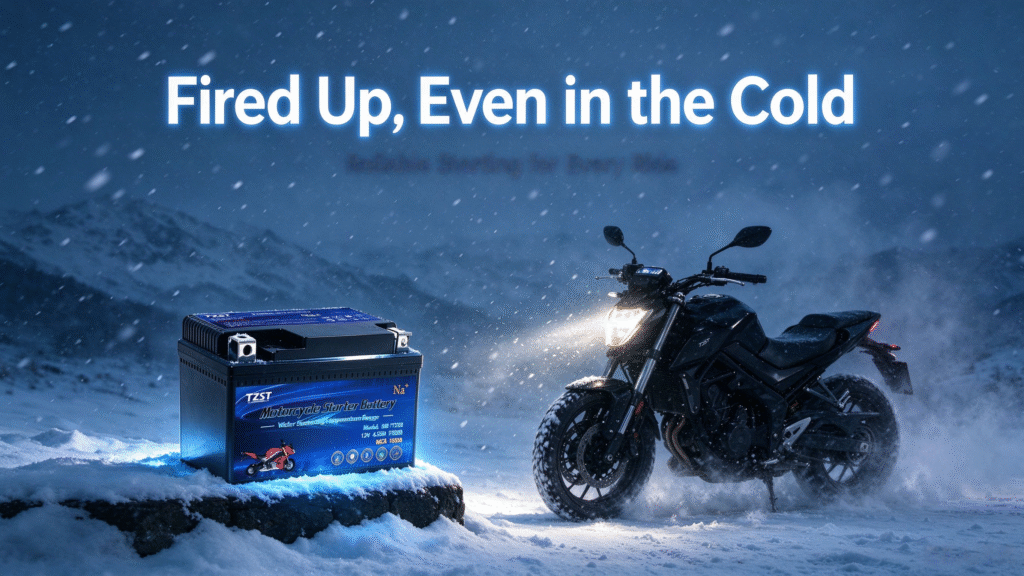
Latest Sodium-Ion Battery News: Platformed Design Brings Broader Vehicle Compatibility
Leading motorcycle battery manufacturers are now focusing heavily on platformed, universal-fit sodium-ion battery designs. This is the core development direction for next-generation motorcycle batteries. Mass adoption is accelerating, as repair shops and distributors abandon inefficient fragmented lead-acid product lines.
The latest upgraded sodium ion motorcycle batteries offer wider model compatibility and more stable performance than early versions. They serve as perfect direct drop-in replacements for almost all traditional lead-acid motorcycle batteries on the current market.
How Platformed Sodium Battery Designs Eliminate Wrong Shipment Risks
Wrong battery shipments are one of the most profit-damaging operational issues for distributors. Sending incompatible battery models leads to return shipping costs, repeated restocking, extra administrative labor, and damaged customer trust.
A 2024 industry survey quantified these losses. Wrong battery shipments cost motorcycle battery distributors an average of 4.2% of annual category revenue. 68% of these errors stem from confusing similar-looking specialized lead-acid SKUs.
Platformed sodium ion motorcycle battery designs almost completely eliminate such errors. The streamlined universal SKU portfolio lowers warehouse identification difficulty. Each universal battery model has clear packaging labels that list all compatible motorcycle makes and models. This further reduces picking and shipping mistakes.
The simplified product line also reduces pre-sales pressure for sales teams. Staff no longer need to memorize hundreds of complex compatibility charts. Industry early adopter data shows that pre-sales consultation time drops by 47% on average. Sales teams can handle more customer inquiries and close more deals daily. Meanwhile, universal-fit designs support flexible order quantities for both small retailers and large bulk clients, with no need for rigid minimum order quantities for slow-moving specialized models.
Real-World Operational Efficiency Improvements From Sodium Ion Motorcycle Battery Adoption
Distributors who have switched to sodium ion motorcycle batteries report significant operational and profit improvements within just 6 months.
A regional distributor in Thailand replaced its full lead-acid battery lineup with universal sodium-ion models. The company reduced total inventory value by 48% while covering 94% of local market demand. It also achieved a 76% drop in order error rates and a 32% increase in battery category profit margins, thanks to lower waste and reduced operational overhead.
An Indonesian distributor saw equally impressive results. After adopting sodium ion motorcycle batteries, the business cut 41% of battery warehouse storage space. The freed space was repurposed for high-margin motorcycle accessories, driving an overall business revenue growth of 18%.
Independent industry projections support these real-world cases. By 2028, platformed next-gen sodium ion motorcycle batteries will capture 32% of the global motorcycle battery market. As manufacturers upgrade design maturity and scale production, compatibility will continue to improve, and product costs will keep declining. This makes sodium ion motorcycle batteries a cost-effective, high-reward choice for distributors of all sizes worldwide.
Final Thoughts
If you want to simplify battery inventory operations, cut order error rates, lower maintenance costs, and boost overall profit margins, our high-compatibility sodium ion motorcycle batteries are your ideal solution. Our universal-fit batteries fit all mainstream motorcycle models and deliver stable, long-lasting performance even in extreme tropical high-temperature and high-humidity environments.