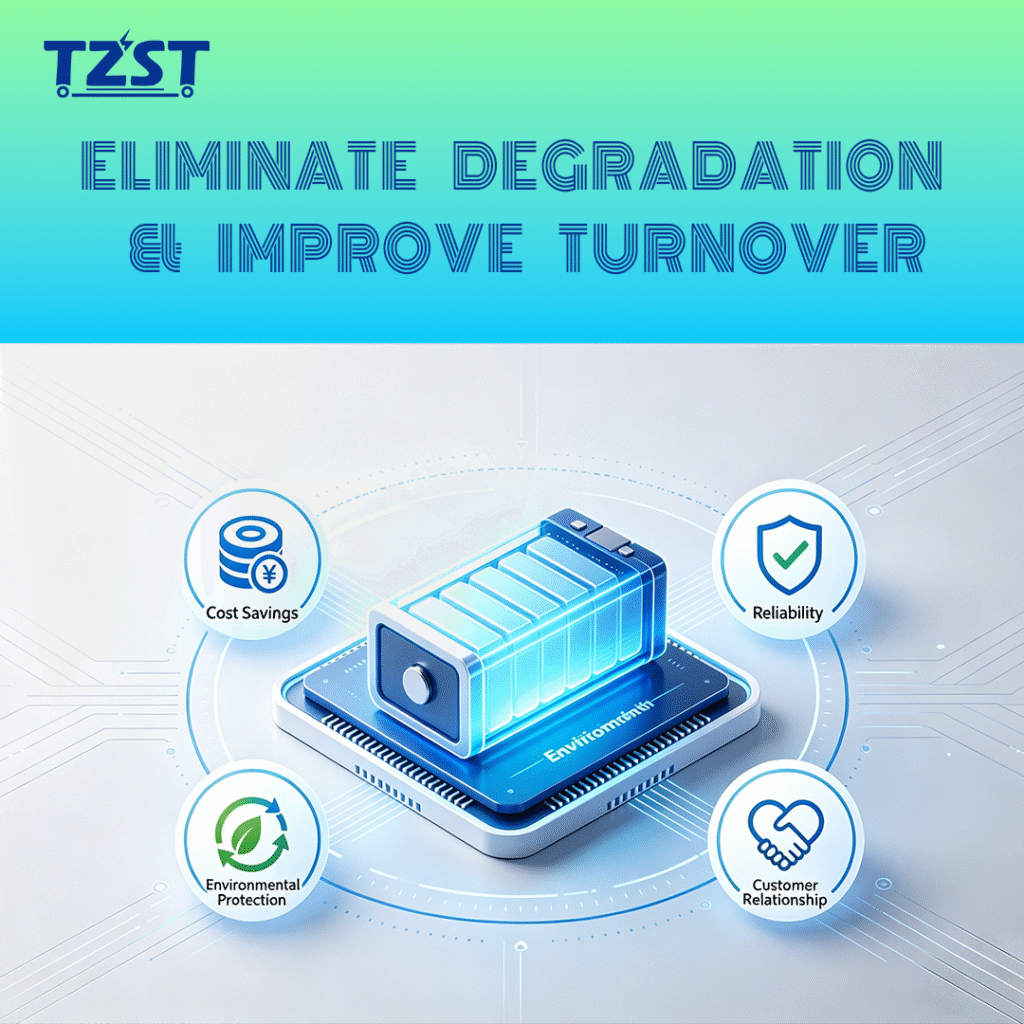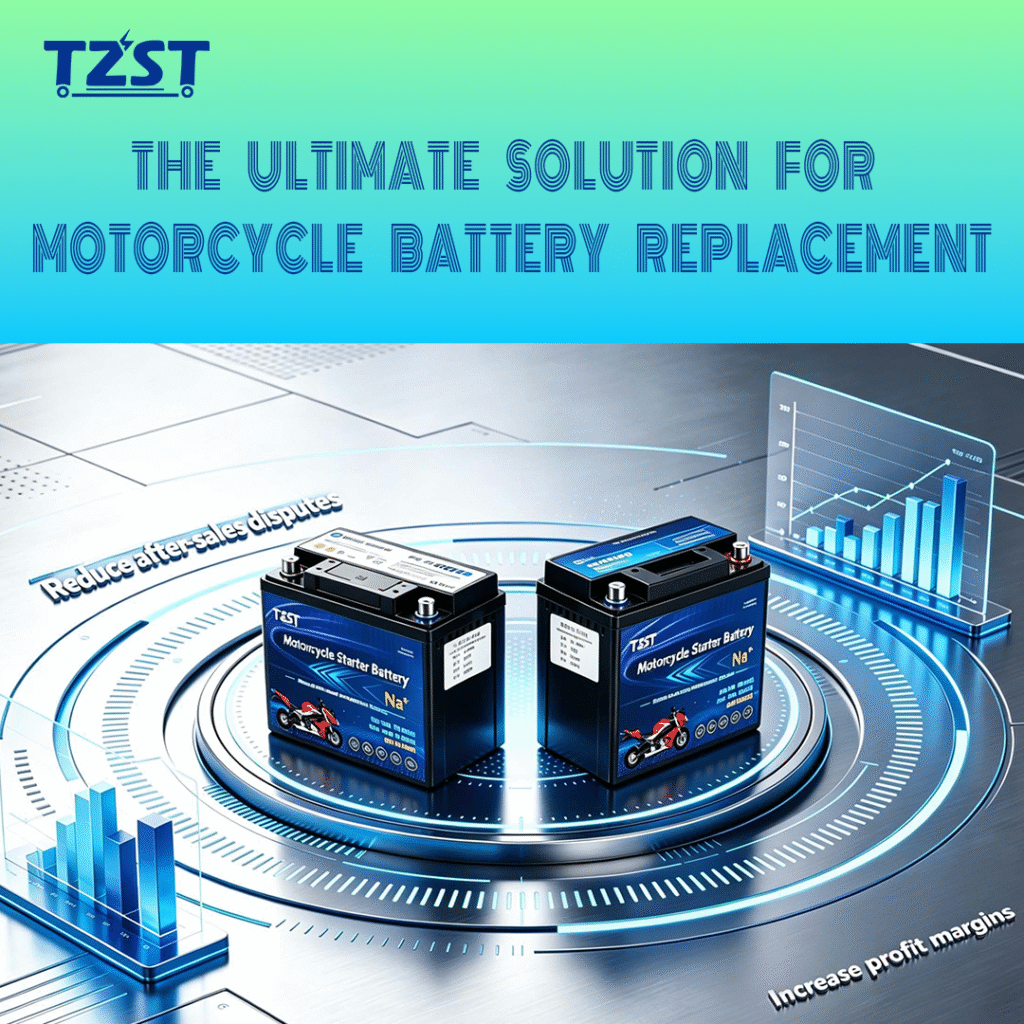
According to the 2025 Global Motorcycle Aftermarket Research Report, 62% of regional battery distributors face an average annual 12% revenue loss from unused lead-acid battery inventory. This widespread industry loss stems from the high self-discharge rate and severe sulfuration issues of traditional lead-acid batteries, which turn idle warehouse stock into dead assets over time. Sodium-ion motorcycle batteries solve this long-standing aftermarket inventory pain point perfectly, delivering stable, high-performance battery solutions for motorcycle replacement markets. By replacing problematic lead-acid stock with next-gen sodium-ion alternatives, battery distributors can eliminate storage-related degradation losses and convert static inventory costs into sustainable, predictable profit streams. This comprehensive guide explains how sodium-ion motorcycle battery technology fixes core inventory management challenges and why it is a high-priority addition to every battery distributor’s product portfolio.
Sodium Ion vs Lead Acid Motorcycle Battery: Performance Gaps That Impact Your Bottom Line
The performance differences between sodium-ion and traditional lead-acid motorcycle batteries directly affect distributor operational costs, inventory risk, and overall profit margins. For motorcycle battery stock operators, the most critical differentiators lie in storage stability, service lifespan, and market adaptability. These key advantages of sodium-ion motorcycle batteries create measurable improvements in inventory efficiency, lower asset waste, and deliver far higher returns on every inventory investment compared to conventional lead-acid models.
Lead Acid Motorcycle Battery Replacement: Why It’s Time to Switch Your Stock
Lead-acid batteries have long dominated the motorcycle replacement battery market, but their inherent chemical flaws create recurring, avoidable financial losses for aftermarket distributors. Even under ideal warehouse storage conditions, standard lead-acid motorcycle batteries self-discharge at a monthly rate of 3-5%. For stock stored for 6 months or longer, 22% of lead-acid units develop irreversible sulfuration damage, rendering them completely unsellable for end-user installation.
This means any lead-acid motorcycle battery inventory that fails to turnover within 3 months will erode your profit margins. Distributors are forced to either sell degraded stock at a steep discount or write off dead inventory entirely. Switching to sodium-ion motorcycle battery replacement eliminates these risks entirely. Thanks to the stable chemical structure of sodium-ion cells, these batteries never suffer from the sulfuration issues that plague lead-acid stock, even during extended long-term warehouse storage.
How Low Self-Discharge Rate Reduces Unnecessary Inventory Loss
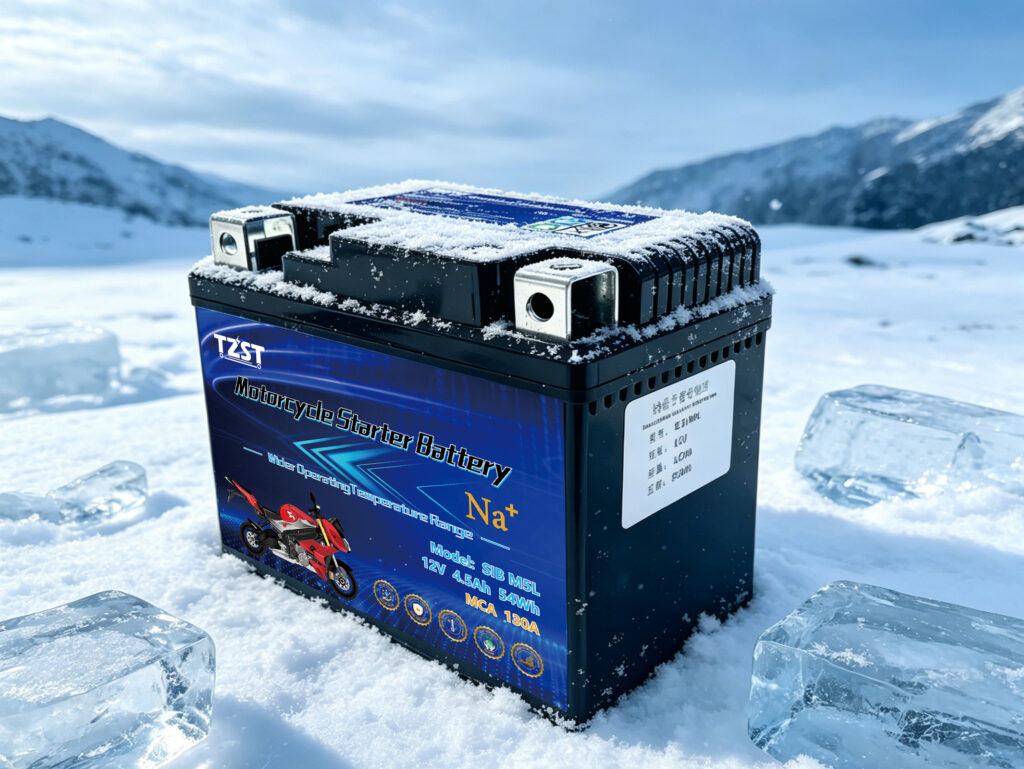
One of the most valuable sodium ion motorcycle battery advantages is its industry-leading ultra-low self-discharge performance. Professional testing verifies sodium-ion motorcycle batteries lose less than 3% of total capacity after 12 months of storage in standard ambient warehouse conditions. Unlike high-maintenance lead-acid batteries that require monthly manual charging to slow degradation, sodium-ion units require zero routine maintenance during long-term storage while retaining full factory performance for end users.
This exceptional storage stability transforms inventory management for battery distributors. You no longer need to discount aged stock rapidly to avoid write-offs, and you can cut labor costs associated with frequent inventory maintenance checks and routine charging cycles. Independent third-party data from the 2026 Electric Vehicle Component Performance Report confirms that sodium-ion motorcycle batteries deliver 91% lower storage-related degradation rates than equivalent lead-acid models. On average, this core advantage reduces distributors’ annual inventory losses by 10.7%, creating immediate bottom-line improvements for aftermarket battery businesses.
Sodium Ion Motorcycle Battery Advantages to Optimize Your Stock Operations
Beyond eliminating storage degradation and inventory waste, sodium-ion motorcycle batteries deliver a full suite of operational benefits that optimize end-to-end stock management. From flexible safety stock planning and improved inventory turnover to higher per-unit gross margins and lower return rates, these next-generation batteries upgrade your entire inventory model, turning capital-tied stock into a reliable profit driver.
Maximizing Sodium Ion Motorcycle Battery Lifespan for Flexible Stock Planning
The sodium ion motorcycle battery lifespan is three times longer than traditional lead-acid batteries, covering both active on-vehicle usage and long-term warehouse storage. This dramatic lifespan upgrade completely rewrites the rules for motorcycle battery inventory planning. Distributors no longer need to prioritize rushed fast turnover to prevent stock depreciation or dead inventory.
You can maintain sufficient safety stock to cover sudden market demand spikes, seasonal sales surges, and bulk order requests without worrying about capital depreciation from idle inventory. This newfound flexibility directly improves your inventory turnover ratio (ITO). You can place larger bulk orders to qualify for wholesale pricing and reduce per-unit procurement costs, while minimizing expensive small-batch restock frequencies. Real-world 2025 field tests with battery distributors show that switching to sodium-ion stock improves average inventory turnover by 27% within the first six months of adoption.
Boosting Gross Margins With High-Demand Sodium-Ion Battery SKUs
Commoditized lead-acid motorcycle batteries are constantly trapped in cutthroat price wars, squeezing distributor profit margins to razor-thin levels. In contrast, sodium-ion motorcycle batteries are high-demand, differentiated SKUs that support premium pricing and higher sustainable gross margins. Motorcycle owners and repair shops are willing to pay a premium for durable batteries that maintain full performance after long storage periods and deliver longer in-service lifespans.
Superior product stability also drastically reduces post-sales issues. Sodium-ion motorcycle batteries record 89% fewer product returns caused by dead-on-arrival faults or storage-induced performance degradation compared to lead-acid alternatives. Distributors can adopt a low-risk expansion strategy: start with small test batches to verify local market demand, then scale up bulk orders steadily as sales volume grows. This approach minimizes upfront investment risks while capturing maximum profit from the fast-growing sodium-ion motorcycle battery market segment.
Ultimately, replacing traditional lead-acid inventory with sodium-ion motorcycle batteries transforms your battery stock from a capital-heavy cost center into a high-margin, low-risk profit engine. With zero storage sulfuration loss, ultra-low self-discharge, longer lifespan, and stronger market profitability, sodium-ion technology is the definitive upgrade for modern motorcycle battery aftermarket distributors looking to stabilize revenue and scale sustainably.