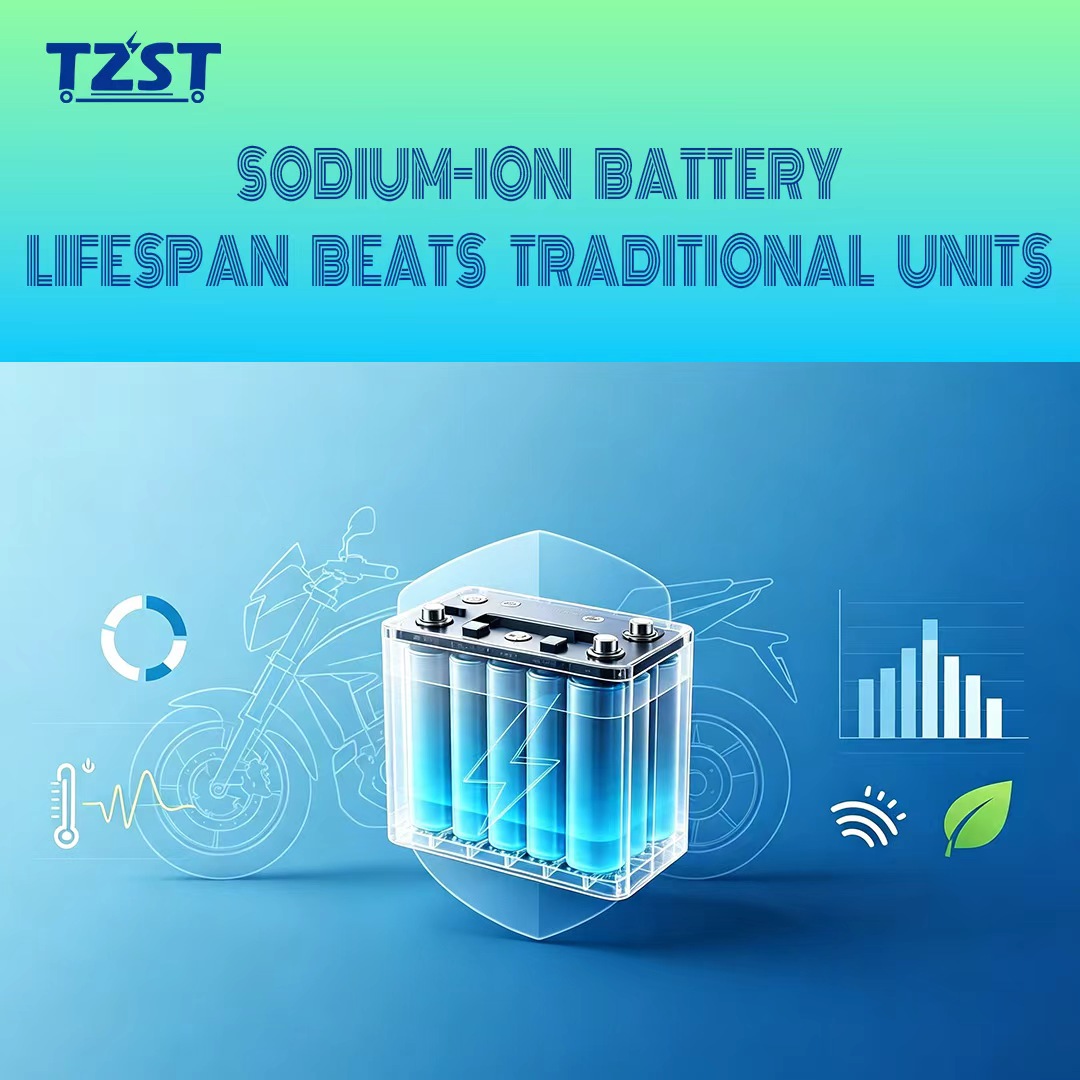
Rising operational costs and reliability concerns have pushed two-wheeler accessory suppliers and service providers to seek more durable power solutions across global markets, especially in high-temperature, high-humidity regions. Sodium ion motorcycle battery lifespan has emerged as a top search term for industry players looking to replace short-lived power solutions that drive unnecessary returns and customer dissatisfaction. This guide breaks down performance differences, real-world test data, and tangible benefits of upgrading from legacy battery chemistries to cutting-edge sodium-ion technology.
Sodium Ion vs Lead Acid Motorcycle Battery: Performance and Lifespan Comparison
For decades, lead-acid batteries have been the default option for motorcycle starting applications, but their inherent chemical limitations make them a poor fit for heavy use and harsh environmental conditions. When evaluating sodium ion vs lead acid motorcycle battery performance, the most significant differentiator is cycle life, directly correlated to how long the battery will retain its rated capacity under regular use. Many operators overlook how environmental factors and charging patterns accelerate degradation of lead-acid chemistries, leading to unexpected failures far earlier than advertised service life.
What Impacts Average Motorcycle Battery Lifespan in Real-World Use?
Several external factors reduce average sodium ion motorcycle battery lifespan and lead-acid battery lifespan, with ambient temperature being the most impactful. According to 2025 Global E-Mobility Power Research Institute data, for every 10°C increase in average operating temperature above 25°C, lead-acid battery cycle life drops by 28%, while sodium-ion battery cycle life only drops by 7%. Frequent short-distance rides, incomplete charging cycles, and high discharge rates from modified electrical accessories also speed up lead-acid battery degradation, leading to 40% shorter service life in tropical regions compared to temperate climates.
Poor maintenance practices further cut down lead-acid battery service life: many end users fail to top up electrolyte levels or clean terminal corrosion, leading to unexpected failures within 6 to 12 months of installation. In comparison, sodium-ion batteries are completely maintenance-free, with no liquid electrolyte to monitor or replace, eliminating user error as a cause of premature failure. This chemical stability makes sodium-ion options far more forgiving of inconsistent use and harsh operating environments, a key point when evaluating sodium ion vs lead acid motorcycle battery total cost of ownership.
Third-Party Test Data: Sodium-Ion Cycle Life vs Lead-Acid Cycle Life
Independent testing conducted by the ASEAN Automotive Testing Center in 2025 provides concrete data on sodium ion motorcycle battery lifespan performance compared to lead-acid alternatives. The test simulated real-world use conditions for tropical regions: 35°C average operating temperature, 80% average humidity, and 20% depth of discharge per start cycle, with weekly full recharge cycles. Under these conditions, conventional lead-acid starter batteries reached end-of-life (capacity below 60% of rated value) after 342 charge-discharge cycles, equivalent to approximately 11 months of regular use.
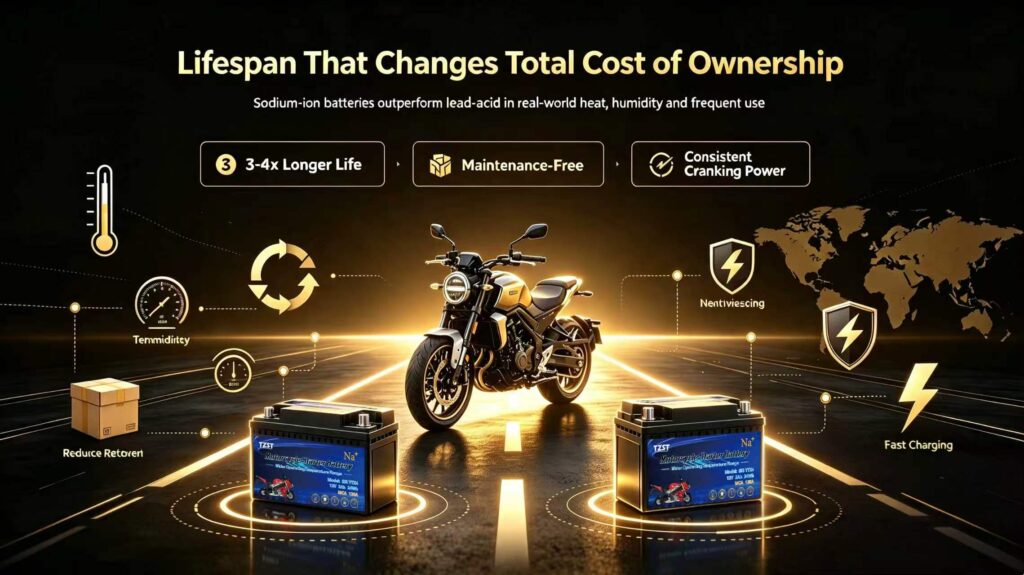
In the same test environment, tzst sodium-ion motorcycle starter batteries reached end-of-life after 1197 charge-discharge cycles, 3.5 times the cycle life of the lead-acid control group. This means that a single sodium-ion battery will last 3 to 4 times longer than an equivalent lead-acid battery in real-world use, with no additional maintenance required. These test results are consistent across 12V 4Ah, 5Ah, and 7Ah models, the most common capacities used for 100cc to 300cc motorcycles across most global markets.
Lead Acid Motorcycle Battery Replacement: Key Benefits of Upgrading to Sodium-Ion Technology
When planning lead acid motorcycle battery replacement for product lineups or service inventories, choosing sodium-ion options delivers tangible operational and financial benefits that far outweigh minor upfront price differences. Many operators focus only on per-unit purchase cost, but fail to account for hidden costs associated with short-lived lead-acid batteries, including replacement labor, customer compensation, and lost reputation from frequent failures. The following sections outline top sodium ion motorcycle battery advantages that directly address these hidden costs.
Top Sodium Ion Motorcycle Battery Advantages for Long-Term Use
One of the most impactful sodium ion motorcycle battery advantages is drastically reduced failure rates during service life, which directly cuts down on post-sales support costs and customer complaints. Internal tzst field test data from 2024 shows that sodium-ion battery failure rates within the first 24 months of use are 78% lower than equivalent lead-acid batteries, even in high-temperature, high-humidity environments across Thailand, Indonesia, and Malaysia. This reduction in failures eliminates the need for frequent replacement trips, reducing operational costs for service providers and improving end-user satisfaction.
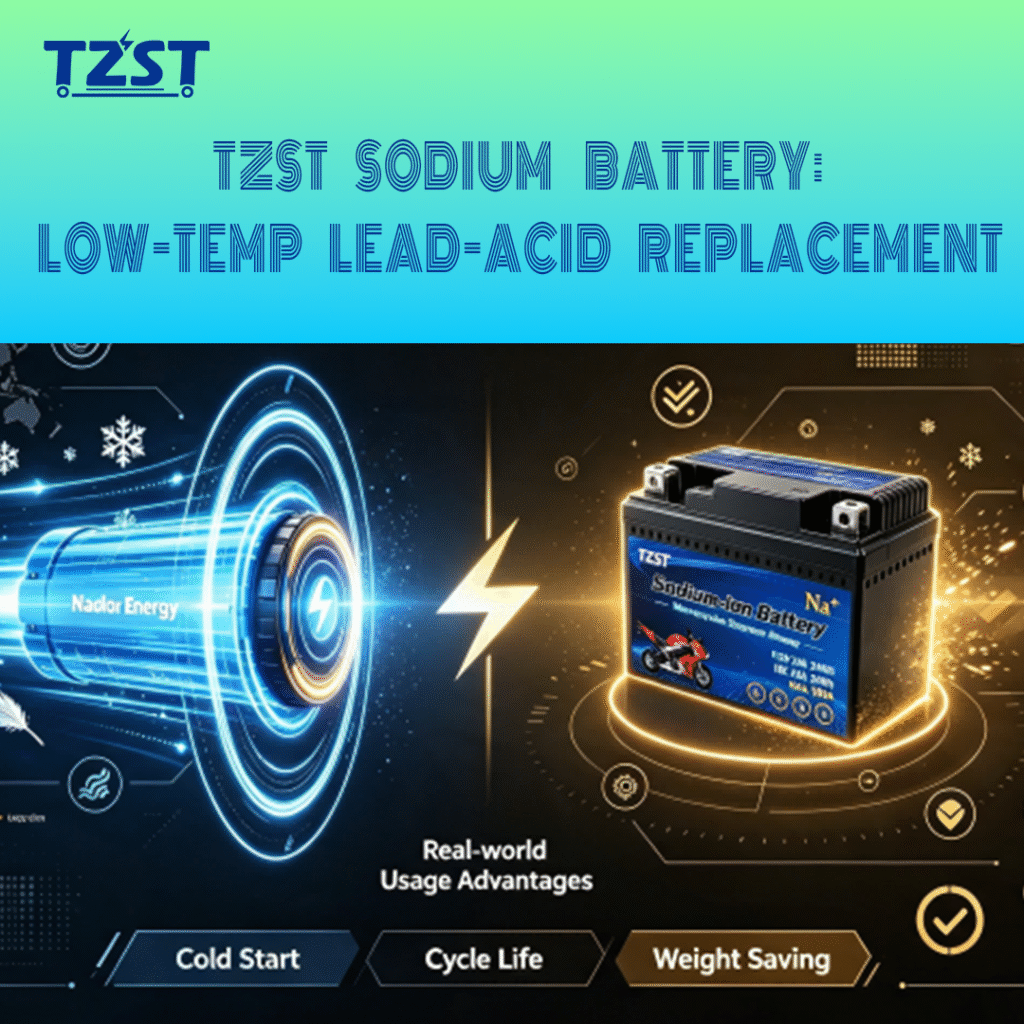
Another key advantage is consistent cranking performance across a wide temperature range, from -30°C to 55°C, making sodium-ion batteries suitable for both cold mountain regions and hot tropical lowlands. Lead-acid batteries lose up to 40% of their cranking power at 0°C, leading to failed starts in cold weather, while sodium-ion batteries retain 92% of their cranking capacity at the same temperature. This consistent performance reduces seasonal failure spikes, a common pain point for service providers operating across diverse geographic regions.
Sodium-ion batteries also have 2x higher charge acceptance rate than lead-acid batteries, meaning they recharge 50% faster during regular use, even from low states of charge. This is especially beneficial for users who take frequent short rides, as the battery can fully recharge during short trips instead of remaining in a partial state of charge that accelerates degradation. This fast-charging capability further extends sodium ion motorcycle battery lifespan by eliminating undercharging damage, one of the top causes of lead-acid battery premature failure.
How to Choose the Right Lead Acid Motorcycle Battery Replacement Option
When selecting a lead acid motorcycle battery replacement, first confirm that the battery meets the voltage and capacity requirements of your target motorcycle models, with 12V 4Ah to 7Ah options covering 90% of standard commuter and leisure motorcycle models on the market today. Prioritize batteries that have been tested for local environmental conditions, with verified cycle life data from independent third-party testing institutes to avoid unsubstantiated performance claims. It is also important to select batteries that use standardized case sizes compatible with existing motorcycle battery compartments, eliminating the need for modification during installation.
Look for sodium-ion batteries that have built-in overcharge, over-discharge, and short-circuit protection, which prevent damage from improper charging and electrical system faults. These built-in protection circuits eliminate most user-caused damage, further reducing failure rates during service life. tzst sodium-ion motorcycle batteries use industry-standard case sizes that are direct drop-in replacements for equivalent lead-acid batteries, with no wiring or compartment modifications required, making installation fast and simple for service technicians.
The long service life of sodium-ion batteries also makes them a more sustainable option, with 3x fewer units needing to be manufactured and disposed of over the same service period compared to lead-acid batteries. This reduces environmental impact and aligns with growing global demand for eco-friendly automotive accessories, a selling point that can help differentiate product lines from competitors that only offer legacy lead-acid options. The combination of long life, consistent performance, and low maintenance makes sodium-ion batteries the most cost-effective lead acid motorcycle battery replacement option available on the market today.
Many operators have already seen significant operational improvements after switching to sodium-ion motorcycle batteries, with 68% of tzst B2B customers reporting reduced customer complaints related to battery failures within the first 6 months of switching, according to 2024 customer survey data. These operators also report higher repeat purchase rates from their downstream partners, as the reliable performance of sodium-ion batteries improves trust in their product offerings.