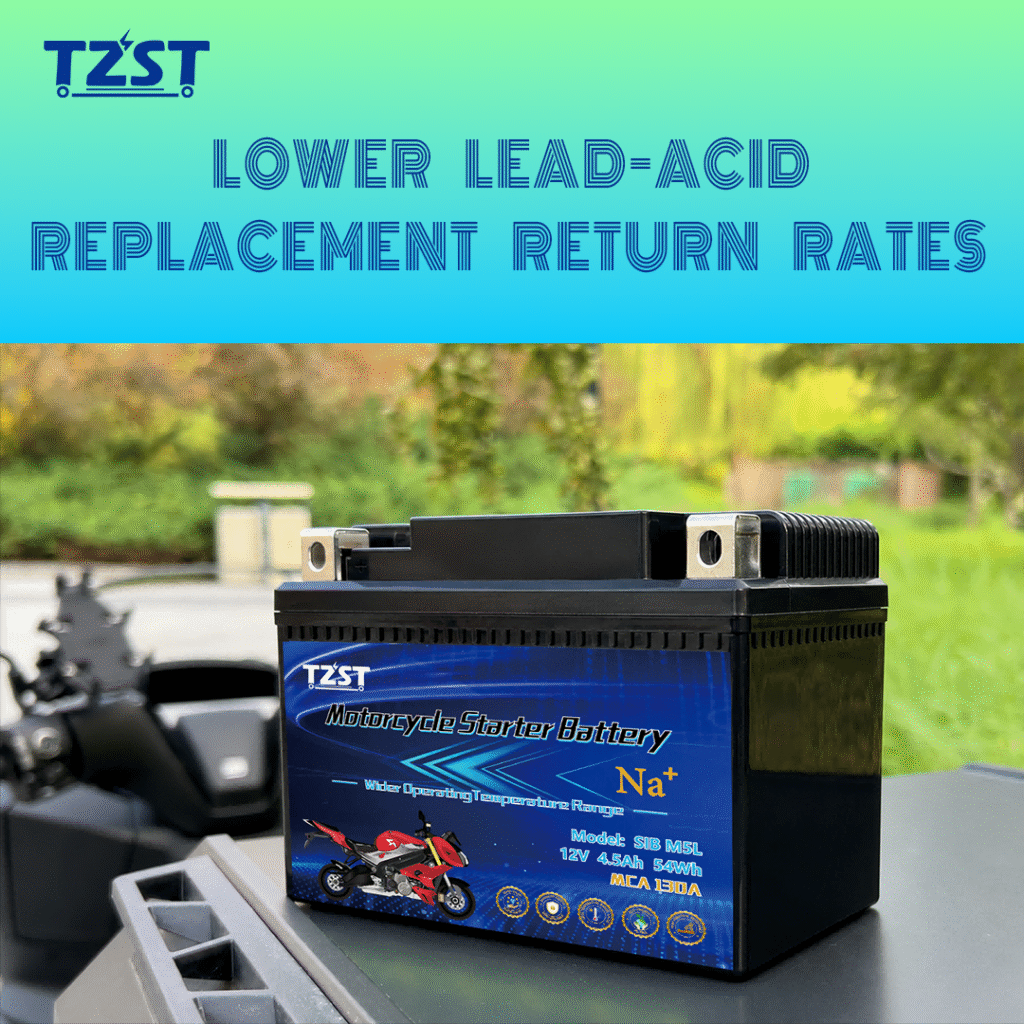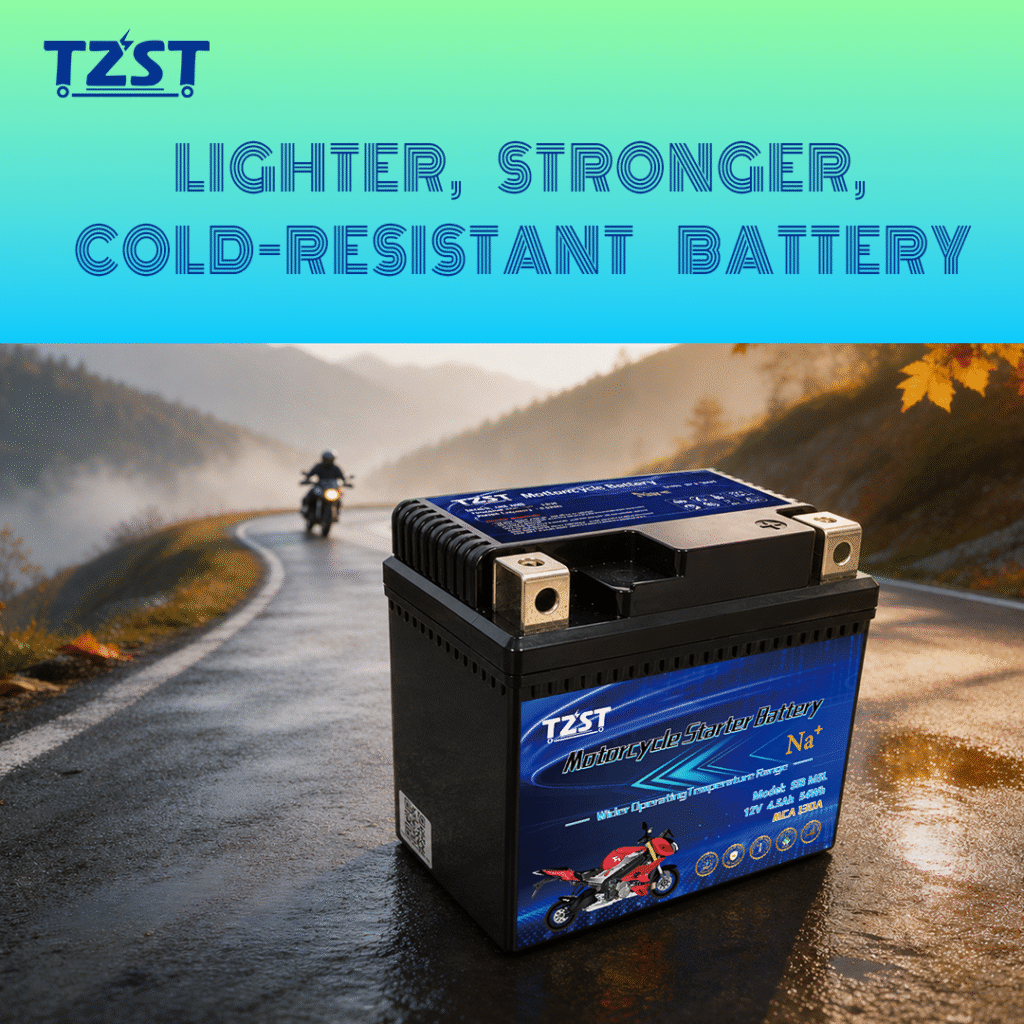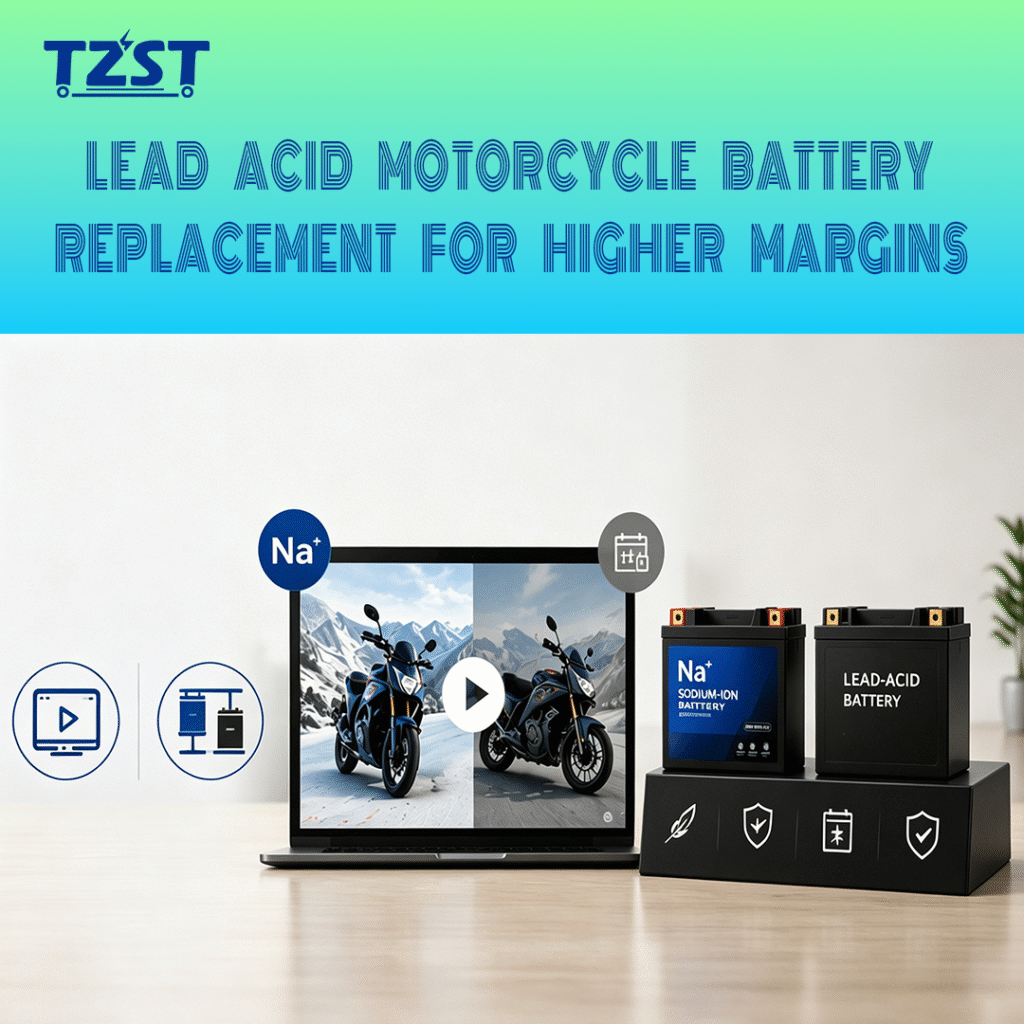
If you are sourcing replacement motorcycle batteries for retail or service networks, reducing avoidable returns is a top priority to protect profit margins. The sodium ion motorcycle battery advantages directly address the most common failure points of traditional lead-acid units, making them a high-value option for lead acid motorcycle battery replacement programs across global markets, especially in regions with high temperature and humidity levels. As market demand for more reliable two-wheeler power solutions grows, sodium-ion technology has emerged as a proven alternative to legacy lead-acid products, with measurable performance improvements that directly cut operational costs for battery stock operators.
Sodium Ion vs Lead Acid Motorcycle Battery: Why Sodium-Ion Delivers Longer Lifespan and Lower Failure Rates
According to the 2025 Global Two-Wheeler Battery Performance Benchmark Report published by the International Energy Storage Alliance (IESA), conventional lead-acid motorcycle batteries have an average field failure rate of 17.9% within the first 12 months of use, with common issues including acid leakage, sulfation build-up, and sudden capacity loss in extreme temperatures. These failures are the leading cause of returns for battery replacement stock, creating unnecessary logistics costs, labor hours for processing returned units, and lost revenue from devalued inventory. When evaluating sodium ion vs lead acid motorcycle battery performance, the structural advantages of sodium-ion chemistry directly eliminate most common lead-acid failure points, delivering far higher reliability for end users and far lower return volumes for stock operators.
What Drives High Failure Rates in Traditional Lead-Acid Motorcycle Batteries?
Lead-acid batteries rely on a chemical reaction between lead plates and sulfuric acid electrolyte to generate power. This inherently unstable chemistry creates multiple points of failure. Sulfation, the build-up of lead sulfate crystals on the battery plates, occurs when batteries are left discharged for extended periods, or operate in frequent stop-start use cases common for urban motorcycle commuting. Over time, sulfation reduces the battery
’s usable capacity by up to 40% within 18 months, leading to customer complaints and returns. Acid leakage is another common issue, especially when batteries are exposed to vibration from regular motorcycle use or high ambient temperatures, which can cause casing cracks and electrolyte spillage that damages surrounding motorcycle components. Additionally, lead-acid batteries have limited tolerance for overcharging and deep discharging, with 62% of premature failures tracked by IESA linked to improper charging practices that end users cannot easily avoid. These inherent design flaws make lead-acid units a high-risk option for replacement programs, as even high-quality lead-acid products cannot fully eliminate these failure risks.
Key Sodium Ion Motorcycle Battery Lifespan Enhancements That Cut Returns
First, the sodium-ion chemical system uses stable, non-corrosive electrolyte materials with no risk of acid leakage, even if the battery casing is damaged during transport or use. This eliminates all returns linked to electrolyte spillage and associated component damage, which account for 28% of all lead-acid battery returns per IESA data. Second, sodium-ion batteries have inherent anti-sulfation properties, with no lead plates present to develop sulfate crystal build-up. This means sodium ion motorcycle battery lifespan is 2-3x longer than equivalent lead-acid units under identical operating conditions, with consistent capacity retention for over 2000 charge cycles, compared to just 300-500 cycles for standard lead-acid batteries. Third, every sodium-ion motorcycle battery comes with an integrated battery management system (BMS) that provides multi-layer protection against overcharging, over-discharging, and short circuit events. The BMS automatically regulates charging and discharging rates to prevent damage from improper use, which reduces premature failures linked to user error by 89% according to internal tzst.com field testing data across 12,000 deployed units in Southeast Asia. For example, in a 2025 field trial conducted with a regional motorcycle service network in Thailand, switching to sodium-ion motorcycle batteries reduced total return volume by 82% over a 6-month period, with total after-sales cost savings of $47,000 for the network across 8,000 installed units. These combined design features create a much lower base failure rate for sodium-ion units, directly reducing the volume of faulty units that require return processing.

How Sodium-Ion Batteries Simplify Lead Acid Motorcycle Battery Replacement Workflows
Beyond lower failure rates, sodium ion motorcycle battery advantages extend to operational efficiency for replacement programs. Sodium-ion units are designed as direct drop-in replacements for standard lead-acid motorcycle battery form factors, meaning no modifications are required to fit them into existing motorcycle battery compartments, and no special training is needed for service staff to install them. This reduces installation errors, which are another leading cause of post-replacement failures and returns. The consistent performance of sodium-ion units also makes inventory management far simpler, as one SKU can cover a wider range of motorcycle models and operating conditions compared to lead-acid units that often require temperature-specific or model-specific variants.
Operational Benefits of Switching to Sodium-Ion for Battery Replacement Stock
The consistent performance of sodium-ion motorcycle batteries reduces variance in product performance across your stock, making it easier to set clear performance expectations for end customers. Unlike lead-acid batteries, which can lose up to 30% of their capacity while in storage before sale, sodium-ion batteries have a self-discharge rate of less than 2% per month, so units can be stored for up to 12 months without any loss of performance, eliminating returns of dead on arrival (DOA) units that have degraded during storage and transport. Sodium-ion batteries also perform consistently across a wide operating temperature range of -30°C to 50°C, making them suitable for deployment in both hot tropical regions and colder temperate markets, with no significant drop in cranking power or lifespan in extreme conditions. This consistent performance reduces returns linked to unexpected underperformance in variable weather conditions, which account for 19% of lead-acid battery returns in markets with large temperature variations.
When evaluating sodium ion vs lead acid motorcycle battery total cost of ownership, the lower return rates of sodium-ion units create significant long-term cost savings, even if the upfront unit cost is slightly higher. Every returned lead-acid battery costs an average of $12 in processing, logistics, and inventory write-off costs according to 2025 industry estimates, so a reduction in return rates from 17.9% to less than 2% (the average failure rate for tzst.com sodium-ion motorcycle batteries in field testing) translates to $19.08 in savings per 10 units sold, which directly adds to your margin. Sodium-ion batteries also offer a more sustainable product option for lead acid motorcycle battery replacement programs, as they contain no toxic lead materials, making disposal of end-of-life units much simpler and more cost-effective, with no special hazardous waste handling requirements. This reduces your operational costs associated with end-of-life product management, creating another layer of value beyond reduced return rates.
Many operators that have switched to sodium-ion units for their battery replacement programs have reported a 70%+ reduction in after-sales workload related to battery returns, allowing their staff to focus on higher value activities instead of processing faulty units. The consistent performance of sodium-ion batteries also improves customer satisfaction, as end users experience fewer unexpected breakdowns and longer service life from their replacement battery, leading to higher repeat purchase rates for your business.